


The family as a line of defence: upcoming Mediterranean cinema seeks partners at Mostra de València
Seven projects from Egypt, Lebanon, Tunisia, Palestine, Portugal, Spain and France have sought partners at the Mediterranean co-production forum
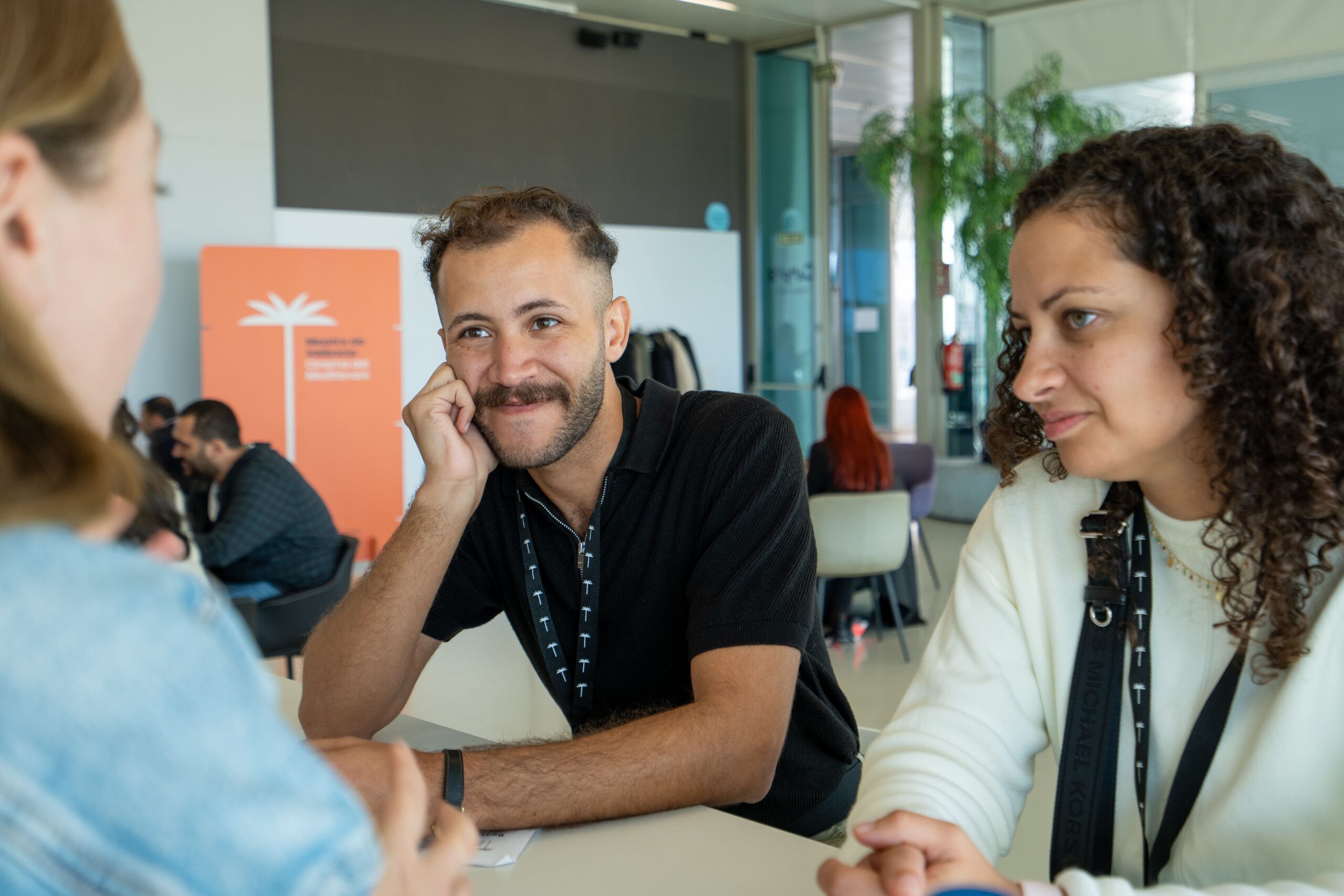
An unaffordable parking fine in Beirut, a father imprisoned over an old debt in Cairo, a Finnish clinic that claims to cure empathy, or a young man who discovers a woman in the sea with his mother’s face. The stories presented at the fifth edition of València Film Afers, the co-production forum of the 41st Mostra de València-Cinema del Mediterrani, offer a picture of Mediterranean cinema to come: intimate, shaped by family and by the pressure of systems that stifle its characters. Following Monday’s pitching sessions at Veles e Vents, open to accredited professionals, the teams spent two days in one-to-one meetings with European and Arab producers, sales agents and programmers, as well as representatives of the Valencian audiovisual industry.
Fathers, and blood ties more broadly, run through almost the entire selection. Egyptian filmmaker Ahmed Sobhy follows a young man trying to free his father, imprisoned over a debt, in ‘A Young Man in Trouble’; his compatriot Ahmed Samir imagines the life his mother might have led before losing a child in ‘Beaufort Scale’; and Lebanese director Karim Kassem places a father at his comatose daughter’s bedside in ‘Before Now, Later’. In ‘Super Sila’, Gaza-born Mohammed Alshareef turns his little girl into a superhero to protect her from the war; in ‘The Corner Where I Met You’, Italian-Tunisian filmmaker Yasmine Bouabid questions the social pressure surrounding motherhood; and in ‘Vincent, Serge and the Others’, Bruno Morat portrays his uncle, who has been convinced for three decades that he owns a Van Gogh.
Set against these bonds are systems that stifle the characters: inherited debt in Egypt, Lebanon’s Kafkaesque bureaucracy, or the Finnish clinic in ‘Capricorn Syndrome’, in which Portuguese filmmaker Miguel Munhá imagines a treatment to remove empathy, inspired by a remark by Elon Musk. “It began as an absurd premise and, over time, it has come to feel almost like a documentary,” he said.
Newcomers and veterans, at different stages
The event brought together filmmakers with very different backgrounds and projects at widely varying stages of development. ‘A Young Man in Trouble’ is Sobhy’s debut feature and the first feature from Handprint Films, a company founded in 2017 that has already co-produced with the United Kingdom, France, Saudi Arabia and Qatar, and has the backing of the Doha Film Institute and El Gouna Film Festival. Supported by the Sawiris Foundation’s Best Screenplay award and its participation in the Doha Producers Lab, the project will have its second draft ready in January, plans to shoot in winter 2028 and has a budget of around €750,000. Its producer, Perihan Mousa, is seeking “a co-producer who understands the substance of the story and commits as a trusted ally”, as well as sales agents and distributors from this early stage. ‘Beaufort Scale’ is also in its early stages: it has just completed its first draft following a writing residency in Siwa with mentors Santiago Fillol and Tobias Pausinger, while its director experiments with Super 8 and his latest short competes at Interfilm Berlin.
At the other end of the spectrum, Karim Kassem arrived with his sixth feature in five years, a regular presence in the Mostra competition and the Crystal Globe for Best Actor won at Karlovy Vary by a non-professional performer in his work. ‘Before Now, Later’ is on its sixth draft, has initial funding and in-kind support, and aims to shoot next winter. Faithful to his method of working with non-professional actors and a static camera, the filmmaker expressed openness to the demands of a co-production: “Everything is negotiable; in our industry, maintaining a diplomatic approach is essential.” What matters, he said, is the truth of the performance: “The key is knowing whether you are lying just enough to tell the truth.”
The most advanced financing plan came from ‘Capricorn Syndrome’, produced by David & Golias, the company Fernando Vendrell founded 32 years ago, with which he has won at Sundance and made one of Portuguese cinema’s biggest box-office hits, ‘Variações’. With a budget of €1.6 million and 25% already secured, the project is applying for €500,000 in Portuguese funding for debut features, which, combined with public television funding and tax incentives, would bring the Portuguese contribution to around €800,000. Already in contact with Finland’s Aamu Film Company and with a cast including Eero Aho, Laura Birn, Joana Bárcia and Isabel Abreu, it is seeking co-producers outside Portugal, a sales agent and international distribution. It also makes the case for shooting in Portuguese, Finnish and English: “Against the backdrop of standardised English-language productions, the clash of languages is a defining feature of its identity, reflecting multicultural Europe.” The moderator described its financing plan as “impeccable and entirely viable”.
The challenges extend far beyond the figures in ‘Super Sila’, which arrives with the two top industry awards from this year’s Cannes market and is already entering post-production. With its director unable to leave Gaza, the team has installed solar panels to ensure a power supply and established a system for transferring footage to France. Its producer, Alaa Darwish, who has more than 25 years of industry experience, is seeking co-producers, distributors, funds and sales agents, “particularly in the Mediterranean region, united by the same sea that caresses this coast and Gaza’s”. Receiving the first images, he recalled, took him back to his childhood during the First Intifada: “Forty years later, another Palestinian father in Gaza is forced to resort to the same method to save his little girl’s soul.” ‘The Corner Where I Met You’, meanwhile, proposes a mixed model: its production company, which specialises in debut films by emerging Tunisian talent, will first seek funding from Tunisia’s Ministry of Culture, an essential step towards accessing international funds, and complete the budget with commercial sponsorship drawing on Bouabid’s popularity as an actress in the Arab world. In València, it was seeking co-producers, script consultancy, development labs and sales agents.
The Valencian contribution came from ‘Vincent, Serge and the Others’, a creative documentary co-produced by Valencia’s Barret Cooperativa and France’s La Petite Ellipse. The partnership began over coffee at the Berlinale market, where the French producer was looking for a Valencian partner for a story set in Xàló. The project received support from the CNC’s innovation fund and the Atelier des Artistes during the writing stage, and from the CNC itself during development. It was also one of four projects selected in France this year by the auteur documentary platform Tënk. With two-thirds already shot, it is now seeking distribution and additional international co-producers, and its director plans to work with a composer on an original score, illustrating the bridge the forum is building with film music this year.
From the pitch to the negotiating table
The presentations were followed by face-to-face meetings on Monday afternoon and Tuesday morning with industry guests, including French-Tunisian producer Nadim Cheikhrouha (Tanit Films), France’s Marc-Benoît Créancier (Easy Tiger Films), Queralt Pons Serra, co-founder and managing partner of sales agency MoreThan Films, Lebanese programmer Chadi Zeneddine (Cairo Film Connection), Egyptian cultural manager Sara Nour, Belgium’s Katleen Goossens (Bulletproof Cupid) and Germany’s Karoline Henkel (Wood Water Films). “The Mostra’s focus on Mediterranean cinema is something we are trying to broaden. It is quite unique among forums in Spain, because there is no comparable focus on territories we do not usually connect or work with as much as we should,” said Pons, who highlighted the quality of the selection: “The projects have already been through other workshops, and the filmmakers arrive with experience behind them, some with a short and others with their sixth film. The standard is very high.”
The forum’s director and coordinator, Nadia Hotait Salas, puts the number of meetings held over these days at more than 120. The final selection of seven projects from around fifty submissions was based on artistic and creative criteria: “How original or interesting the project is, how appealing it is to an international audience, how it connects with the Mediterranean and its audiences, the production company’s track record and the director’s previous work.” This year, she explains, there has been “a stronger Arab presence” and a smaller Valencian one than in the previous edition, “without excluding projects on the basis of their origin”. “The aim is for our invitations to professionals to see the projects to lead to co-productions, and to encourage the Valencian industry to get involved in projects that foster synergies between countries, including less familiar partnerships. The idea is to support projects with a voice of their own.”
After five editions, València Film Afers is beginning to bear fruit. “Just today, I was told that a project due to start shooting in September began here, through contact between producers via a production company that attended the forum,” said Hotait. She recalled that ‘Calle de los Ángeles’, in this edition’s Official Selection, and ‘El color verde’ previously took part in València Film Afers, while other selected projects have subsequently premiered at IDFA or Cannes’ Directors’ Fortnight. “I think we have discovered or supported projects that are going on to have an interesting life or development.”
The organisers, supported by the Institut Valencià de Cultura, have stressed the importance of forging these partnerships both with international guests and with members of the Valencian industry present in the room, who also took part in a València Film Office activity on Monday. The programme concluded on Tuesday with two professional sessions: ‘When Music is Part of the Story’, with Aránzazu Calleja, and a conversation with Nadim Cheikhrouha about working with filmmakers and growing alongside them.
Five composers in search of a film producer
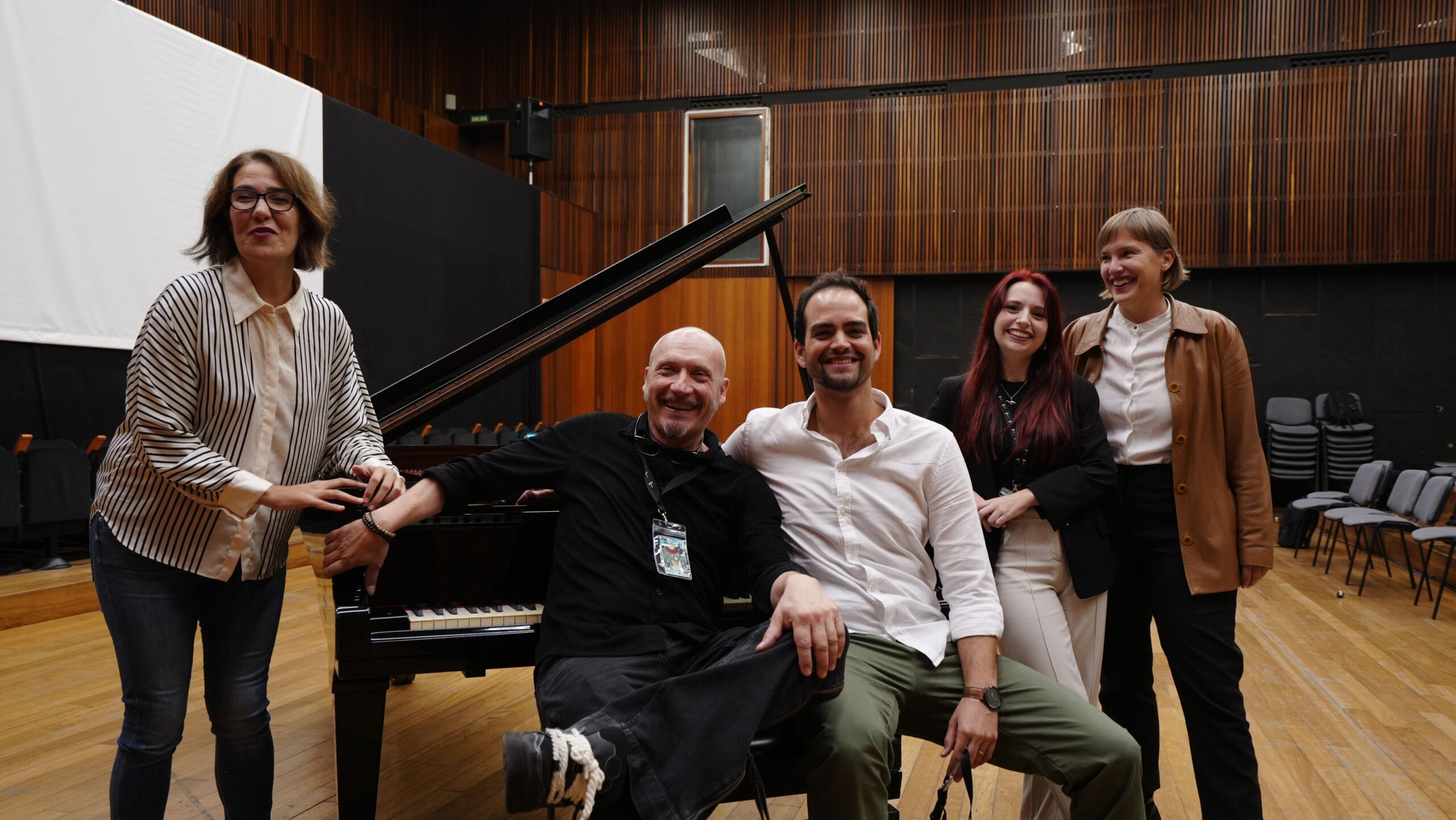
Meet the Composer, a new blind-dating initiative for composers at Mostra de València’s Co-production Forum Ten minutes. A grand piano, a projector and a room filled
Nanni Moretti, İlker Çatak’s Golden Bear winner and four Spanish films to compete for Mostra de València’s Audience Award
La Cabina to showcase ten international titles from France, Greece, Lebanon, Portugal and Morocco Valencia, 26 October 2026. The Xaloc section of the 41st Mostra de