


Nanni Moretti, İlker Çatak’s Golden Bear winner and four Spanish films to compete for Mostra de València’s Audience Award
La Cabina to showcase ten international titles from France, Greece, Lebanon, Portugal and Morocco
Valencia, 26 October 2026. The Xaloc section of the 41st Mostra de València–Cinema del Mediterrani, taking place from 3 to 15 November, will bring together eleven features competing for the €10,000 City of Valencia Audience Award. Screenings will run from 6 to 11 November at Cines Babel and ABC Park. The selection includes one international premiere, two Spanish premieres and eight regional premieres in the Valencian Community, combining arthouse films recognised at major festivals with mainstream comedy, documentary and explorations of historical memory. Four films are debut features, and four are directed by women whose work explores patriarchal power structures across the Mediterranean through desire and female emancipation.
Legendary Italian filmmaker Nanni Moretti will feature twice in the section. First, with ‘Sucederá esta noche’, the adaptation of Eshkol Nevo’s novel that marked his first return to the Venice competition since 1989, starring Louis Garrel and Jasmine Trinca, with music by Alberto Iglesias and the participation of Basque production company Irusoin. Second, with ‘Caro Nanni’, in which Pablo Maqueda rides a Vespa from Madrid to Rome, following in the footsteps of ‘Caro diario’, with contributions from Isabel Coixet and Margherita Buy. The film had its world premiere in Seminci’s Tiempo de Historia section. Joining them is ‘Cartas de estado’, by İlker Çatak, winner of the Golden Bear at the latest Berlinale, in which the director of ‘The Teachers’ Lounge’ portrays a Turkish artist couple who lose everything under state pressure.
Mainstream comedy also features prominently, with two Spanish premieres. ‘La vita va così’, by Riccardo Milani, which opened the 2025 Rome Film Fest and topped the Italian box office, pits a Sardinian shepherd against a businessman seeking to build a luxury resort on his land. ‘Santo Antonio – O Casamenteiro de Lisboa’, by Portuguese-French director Ruben Alves (‘The Gilded Cage’), featuring Paco León in the cast, turns Lisbon’s traditional St Anthony’s weddings into a comedy about two officials forced to reinvent the celebrations following the arrival of a multinational corporation.
New voices from Cannes and Venice
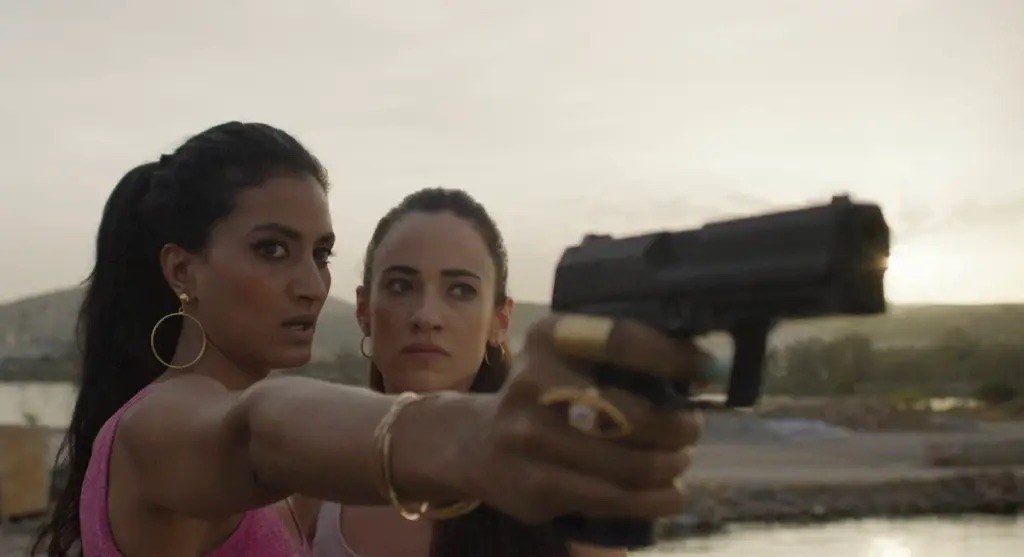
The debut features arrive with the backing of major festivals. From Cannes’ Un Certain Regard section, where both competed for the Caméra d’Or, come ‘Océano titánico’, by Greek filmmaker Konstantina Kotzamani, a co-production with Spanish participation, shot in Japanese and set in a boarding school that trains teenagers to become professional mermaids, and ‘Yesterday the Eye Didn’t Sleep’, by Palestinian filmmaker Rakan Mayasi, filmed without a screenplay and inspired by his grandmother’s forced marriage. Greek filmmaker Evi Kalogiropoulou, whose film premiered at Venice Critics’ Week, presents ‘Gorgonà’, the story of a woman who challenges the patriarchal order of a city ruled by armed men.
Spanish and Valencian cinema complete the selection. ‘Todo es cárcel’, by Eloy Enciso, produced by Filmika Galaika and Umbracle Cine, won the Grand Prix of the International Competition at FIDMarseille with a journey through Franco’s concentration camps, beginning in the port of Alicante at the end of the Spanish Civil War. ‘Salen las lobas’, the debut feature by Claudia Estrada Tarascó, an Audiovisual Communication graduate from the Universitat Politècnica de València’s Gandia campus, arrives following its screening at Seminci. It tells the story of a group of teenage girls in a residential care centre brought together by trap music. The Mostra will also host the premiere of ‘Facundo Martínez, de Mislata a Kioto’, by Mar Navarro Herraiz, with music by Isabel Latorre, a portrait of the builder who left his mark on Valencia in the 1960s and 1970s, and whose admirers proudly proclaim that they live in a “Facundo”.
La Cabina: grief, ageing and female bonds
The medium-length film section La Cabina also returns. Incorporated last year as a competitive section, it revived the spirit of the festival held in Valencia since 2008, which had established itself as one of the world’s leading showcases for productions running between 30 and 60 minutes — a format traditionally sidelined by commercial distribution and general film festivals.
This year, La Cabina presents ten medium-length films, all Spanish premieres, screening from 6 to 13 November at Cines Babel. The selection features titles from France, Greece, Lebanon, Portugal and Morocco, with women filmmakers taking centre stage: seven of the ten films are directed or co-directed by women.
Grief, ageing and female bonds run through much of the selection. ‘Au bain des dames’, by Margaux Fournier, winner of the César for Best Documentary Short Film, offers a non-judgemental look at a group of retired women who meet daily on a Marseille beach to talk about love, sex and the passage of time. Actor Victoire Du Bois — who has worked with directors including Luca Guadagnino and Christophe Honoré — makes her directorial debut with ‘A Bitter End’, an intimate drama about a woman facing an existential crisis. ‘Chère Marcelle’, by Juliette Marrécau, follows four friends trying to save their friendship from silence, while Anna Borie, in ‘À Rosa’, portrays a teenage girl from an oyster-farming family confronting her father’s death. ‘Two Tetas’, by Lynn El Safah, winner of Best Short Film at the Cairo International Film Festival, portrays two Lebanese sisters who have made denial their way of surviving war and the passage of time. Identity and wartime memory also underpin ‘Casting for a Film: Ihsan’s Diary’, in which Lebanese artist Lamia Joreige turns a casting session in Beirut into a reflection on the First World War and the devastating present engulfing the region. The film premiered in the Berlinale’s Forum Expanded.
Following its screening at Cannes’ Directors’ Fortnight and its Jean Vigo Award for Best Short Film, Saïd Hamich Benlarbi’s evocative ‘À la recherche de l’oiseau gris aux rayures vertes’ travels south of Marrakech with a tormented, widowed water diviner searching for a mythical bird. Elements of the fantastic emerge in the Greek films ‘Ludyas’, by Akis Polizos, and ‘The Great Organ’, by Michalis Kimonas and Roxanne Krimizi, intimate portraits of loneliness experienced by children and people with mental health conditions, respectively. Meanwhile, Portuguese filmmaker Miguel Munhá, who is also presenting his project ‘Capricorn Syndrome’ at València Film Afers, explores how family memory is inscribed in the body in his poetic essay film ‘Pássaro Azul’.

The family as a line of defence: upcoming Mediterranean cinema seeks partners at Mostra de València
Seven projects from Egypt, Lebanon, Tunisia, Palestine, Portugal, Spain and France have sought partners at the Mediterranean co-production forum An unaffordable parking fine in Beirut, a
Five composers in search of a film producer
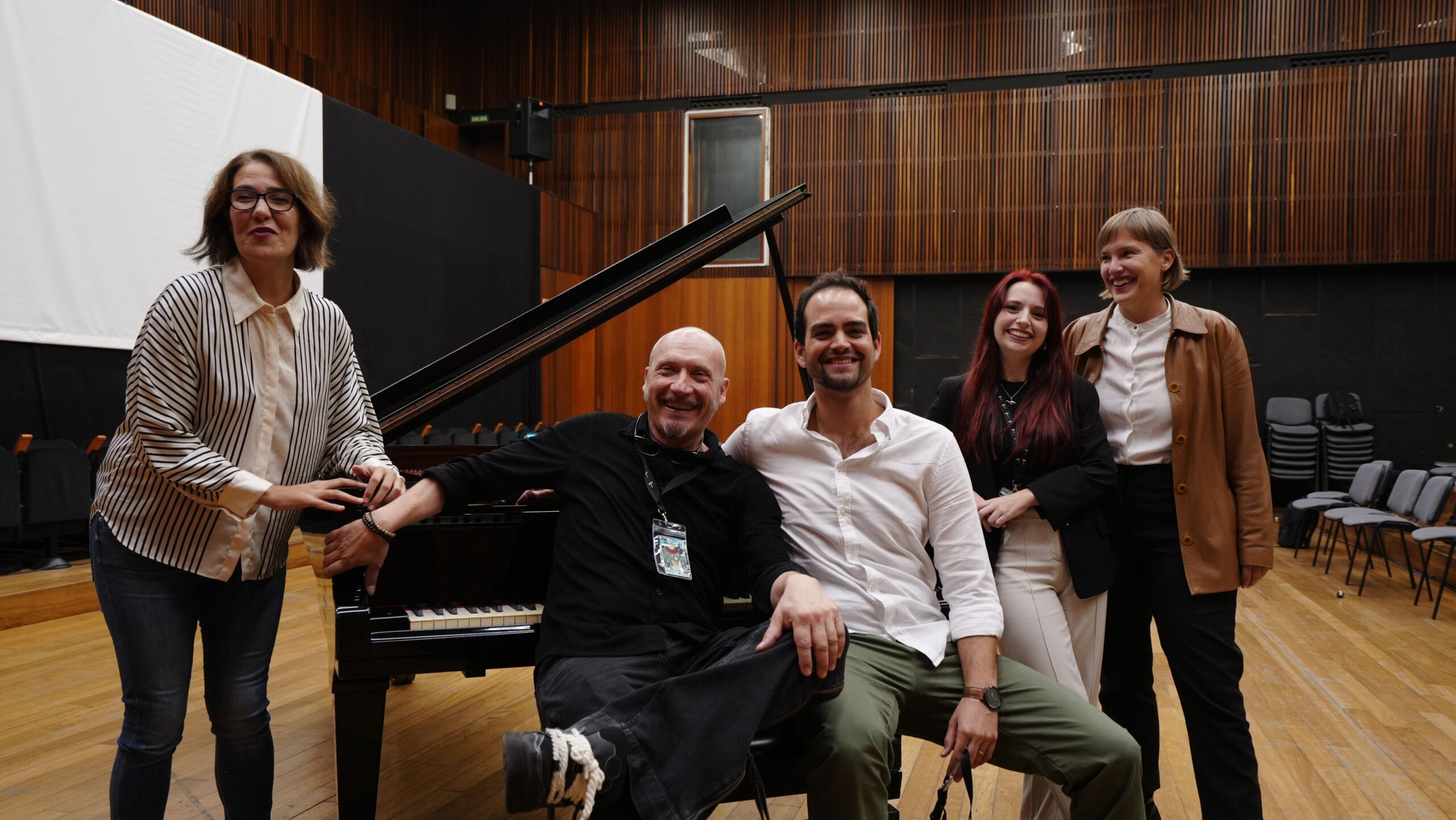
Meet the Composer, a new blind-dating initiative for composers at Mostra de València’s Co-production Forum Ten minutes. A grand piano, a projector and a room filled